Lost Socks Seeking Sole Mates: A Designer's Review
As someone who has spent years navigating the intersection of digital design and physical stitching, I approach every new machine embroidery design with a specific set of questions. Will it stitch out cleanly? Does the layout hold up on textured fabric? Most importantly, does it solve a problem or spark joy for the end user? When I first opened the files for Lost Socks Seeking Sole Mates, designed by Caty Catherine, I was immediately struck by its potential as a staple for any craft business focused on home goods or apparel. This is not just another graphic; it is a conversation starter disguised as a laundry sign.
First Impressions: Visual Personality and Layout
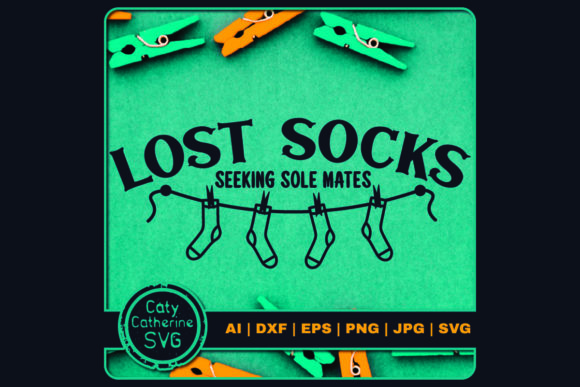
The concept behind Lost Socks Seeking Sole Mates is deceptively simple, which is often where the best designs live. The visual hierarchy is clear, balancing text and iconography in a way that suggests a playful, slightly chaotic energy typical of modern home decor. For an Etsy seller or small shop owner, this kind of design offers immediate recognition. It taps into a universal frustration—the missing sock—with a humorous twist that makes the finished product feel personal and relatable.
From a technical standpoint, the clean lines of the Graphics category suggest that this will translate well from a digital file to a physical hoop. The shape of the lettering and the accompanying imagery appear robust enough to handle standard fill stitches without becoming muddy. However, the true test of any design lies in how it behaves when you move from the screen to the machine. In my experience, designs with high contrast and distinct outlines, like this one, tend to perform better across various fabric textures than those relying heavily on subtle gradients or tiny details.
Real-World Application: From Hoop to Home
Imagine you are preparing a custom order for a client who wants a personalized kitchen towel or a decorative apron for their holiday gift exchange. Lost Socks Seeking Sole Mates fits perfectly into this scenario. I can envision this design stitched onto a heavy cotton tote bag design or even a linen pillow cover. The humor works exceptionally well on items that see daily use, turning a mundane chore into a moment of levity.
Consider a sweatshirt embroidery project for a boutique looking to launch a "Laundry Day" collection. Placing this design on the back of a crewneck or the chest of a hoodie creates a statement piece that stands out in a crowded market. Because the theme is lighthearted, it appeals to a wide demographic, from college students to new parents dealing with endless loads of baby clothes. If you are creating personalized gifts, this design adds a layer of wit that elevates the item above a generic printed shirt.
For those focusing on embroidered patch production, the distinct shapes in Lost Socks Seeking Sole Mates offer excellent opportunities for satin stitch borders. Patches are a high-margin item for many craft businesses, and a design that captures attention instantly increases the likelihood of a sale. Whether attached to a denim jacket, a backpack, or a canvas cap, the message remains legible and charming.
Navigating Technical Challenges and Fabric Choices
While the design is versatile, there are specific scenarios where caution is required. As a designer, I always advise testing your embroidery file on scrap fabric before committing to a final product. This is particularly true if you plan to use this on stretchy materials like jersey knit or thin fabrics like chiffon. The density of the text and graphics in Lost Socks Seeking Sole Mates could cause puckering if the stabilizer choice is incorrect.
When working with dark fabrics, such as navy blue sweatshirts or black tote bags, you must ensure the thread colors provide sufficient contrast. A light-colored fill stitch against a dark background usually works well, but you may need to adjust the stitch density to prevent the base fabric from showing through. Conversely, on very textured fabrics like terrycloth towels, the intricate parts of the design might get lost in the loops. In these cases, simplifying the underlay or increasing the size of the design slightly can make a significant difference in the finished product.
Another consideration is the hoop size. While the design appears compact, always verify the dimensions against your machine's capabilities. If you are using a smaller hoop, you might need to split the design into sections, which requires careful planning to ensure the alignment remains perfect. For curved surfaces like caps, the layout of the text needs to be evaluated to ensure it doesn't warp or become difficult to read once stitched around the brim.
Practical Notes for the Professional Maker
To get the most out of Lost Socks Seeking Sole Mates, follow these practical steps before starting your embroidery project:
- Test on Scrap Fabric: Always run a test stitch-out to check for tension issues, thread breaks, or skipped stitches, especially in areas with tight curves.
- Check Thread Contrast: Use a color palette that pops against your chosen background. Avoid low-contrast combinations that reduce readability.
- Select the Right Stabilizer: For heavy fabrics like denim or canvas, use a cutaway stabilizer. For lighter items like tea towels, a tear-away or water-soluble option may suffice.
- Review Licensing: Before selling commercial embroidery items or offering this as a digital product, confirm the licensing terms provided by Caty Catherine. Ensure you have the right to sell finished goods or digital downloads.
- Create Mockups: Generate printable mockups to visualize how the design looks on different products. This helps in marketing your small shop product effectively on platforms like Etsy.
The versatility of the included formats—SVG, PNG, EPS, DXF, and others—means you aren't limited to just embroidery. You can adapt these assets for laser cutting, vinyl weeding, or screen printing, expanding the utility of your design assets. However, remember that what works for a cut file might need adjustment for a machine embroidery design. The vector lines might be too thin for a running stitch, requiring manual thickening in your digitizing software.
Final Verdict: A Witty Addition to Your Portfolio
In the world of handmade goods, personality sells. Lost Socks Seeking Sole Mates delivers exactly that. It transforms a common household annoyance into a piece of art that customers will want to display proudly. Whether you are creating a baby embroidery item for a nursery, a holiday embroidery gift, or a unique addition to your custom apparel line, this design brings value through its humor and clarity.
For the experienced maker, it serves as a reliable asset that performs well when treated with proper technique. For the beginner, it offers a manageable complexity level that allows for learning without overwhelming frustration. Just remember to respect the technical requirements of your machine and fabric to ensure the highest quality output. With the right execution, Lost Socks Seeking Sole Mates can become a signature piece in your craft business, proving that sometimes the best designs are the ones that make us laugh while we fold laundry.